
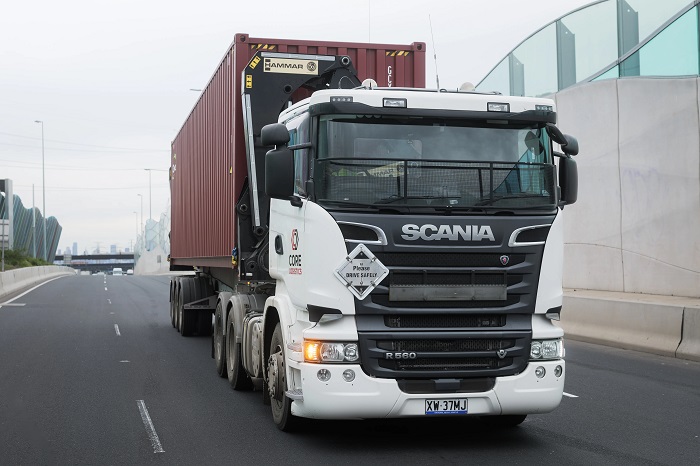
Understanding container weight limits according to NHVR regulations, Chain of Responsibility obligations, and how to avoid costly compliance errors.
MELBOURNE, VIC — Navigating container weight regulations in Victoria can be complex, but understanding the rules upfront prevents costly delays, terminal fees, and legal liability for everyone in the supply chain.
This guide breaks down Victoria’s container weight limits, explains who’s responsible for compliance, and provides practical steps to ensure your shipments move smoothly from port to destination.
Victoria’s Container Weight Limits Explained
The maximum allowable gross weight for containers transported by road in Victoria is 31 tonnes for standard prime mover and trailer (SKEL) combinations. This includes both the cargo weight and the container’s tare weight.
For sideloader transport configurations, the limit is lower at 26 tonnes gross weight.
Exceeding these limits triggers immediate consequences:
- Mandatory unpacking at the terminal
- Additional handling and storage charges
- Delivery delays that cascade through your supply chain
- Potential regulatory penalties under Heavy Vehicle National Law
How Much Can You Actually Load?
The practical cargo capacity depends on your container’s tare weight. Here are the typical maximums based on standard container specifications:
20-foot containers (20GP):
- Container tare weight: ~2,300 kg
- Maximum cargo weight: ~28.7 tonnes
40-foot containers (40GP):
- Container tare weight: ~3,800 kg
- Maximum cargo weight: ~27.2 tonnes
40-foot high cube (40HC):
- Container tare weight: ~4,000 kg
- Maximum cargo weight: ~27.0 tonnes
Critical step: Always verify the actual tare weight stamped on your specific container, as variations exist between manufacturers and container age. Calculate your maximum cargo capacity by subtracting the tare weight from 31 tonnes.
Understanding Weight-Based Transport Surcharges
Even if you stay within legal limits, weight affects your transport costs. Most Melbourne container transport operators apply surcharges for heavier containers:
- Sideloader delivery: Surcharges typically apply above 23 tonnes gross weight
- Standard trailer delivery: Surcharges typically apply above 28 tonnes gross weight
These charges reflect the additional operational requirements to transport heavier loads while maintaining regulatory compliance, including specialized vehicle configurations and enhanced safety protocols.
Chain of Responsibility: Why Everyone’s Liable
Victoria’s Chain of Responsibility (CoR) laws represent a critical compliance consideration that many importers overlook. Under CoR legislation, everyone involved in the logistics process shares legal responsibility for ensuring loads are compliant and safe.
This includes:
- Freight forwarders issuing booking instructions
- Warehouse managers supervising container loading
- Consignees receiving cargo
- Administrative staff processing documentation
- Transport companies moving containers
What CoR means in practice:
If a container is found to be overweight or improperly loaded, penalties can extend to any party who contributed to or failed to prevent the breach—even if they didn’t physically load the container.
Documented due diligence is essential. This means maintaining records of:
- Weight verification procedures
- Accurate weight declarations
- Communication about loading limits
- Cargo restraint compliance
The National Heavy Vehicle Regulator (NHVR) Framework
The NHVR administers the Heavy Vehicle National Law (HVNL), which governs all transport operations involving vehicles over 4.5 tonnes. Key areas of NHVR oversight include:
- Mass limits: Ensuring vehicles don’t exceed legal weight thresholds
- Dimension compliance: Container and vehicle size restrictions
- Load restraint: Proper cargo securement within containers
- Fatigue management: Driver rest requirements for heavy loads
- Vehicle standards: Equipment maintenance and safety requirements
Breaches in any of these areas can result in on-the-spot fines, prosecution, and in serious cases, suspension of operating privileges.
Load Restraint Requirements
Separate from weight considerations, Australia’s Load Restraint Guide (LRG) establishes mandatory standards for securing cargo within containers. Proper restraint prevents:
- Cargo shifting during transport
- Damage to goods
- Container integrity failures
- Road safety incidents
Load restraint compliance is legally required under NHVR regulations and forms part of Chain of Responsibility obligations. For detailed guidance, the NHVR provides comprehensive resources at: https://www.nhvr.gov.au/road-access/loading/load-restraint-guide
Practical Compliance Checklist for Importers
To ensure smooth container delivery and avoid compliance issues:
Before packing:
- Confirm the container’s actual tare weight
- Calculate maximum cargo capacity (31 tonnes minus tare weight)
- Plan for weight-based surcharges if approaching 23-28 tonnes
During packing:
- Use certified weighbridge for verification when possible
- Document loading procedures and weights
- Ensure proper load restraint per LRG guidelines
- Provide accurate weight declarations to your transport provider
Documentation:
- Maintain records proving compliance efforts
- Keep weight certificates and packing declarations
- Document any communications about loading limits
Working with transport partners:
- Choose operators with demonstrated NHVR compliance systems
- Communicate exact weights before booking transport
- Clarify who’s responsible for weighbridge verification
- Understand surcharge thresholds in advance
When Weight Limits Are Exceeded
If your container arrives at the terminal overweight, expect:
- Mandatory unpacking: The container must be destuffed to legal limits
- Additional charges: Unpacking, storage, repacking, and disposal fees
- Delivery delays: Can extend from days to weeks depending on circumstances
- Potential penalties: CoR breaches may result in fines for multiple parties
“The costs of an overweight container extend far beyond the transport surcharge,” notes a representative from Core Logistics, a Melbourne container transport operator. “When you factor in unpacking fees, storage, delays to your customer, and potential regulatory penalties, a single compliance error can cost thousands.”
Regional Victoria Considerations
For deliveries outside Melbourne metro, additional factors apply:
- Some regional routes have lower mass limits on specific road sections
- Remote locations may require specialized transport configurations
- Access to weighbridge facilities varies by region
- Lead times may be longer for compliance verification
Always discuss regional delivery requirements with your transport provider before confirming inland destinations.
Working with Compliant Transport Operators
When selecting a container transport provider, compliance capabilities should be a primary consideration:
Questions to ask:
- What are your weight verification procedures?
- How do you manage NHVR compliance documentation?
- What’s your process if a container arrives overweight?
- Do you have CoR compliance systems in place?
- What are your weight-based surcharge thresholds?
Experienced operators will have clear answers and documented procedures for each of these areas.
Key Takeaways
✓ Stay under 31 tonnes gross weight for standard transport, 26 tonnes for sideloader
✓ Verify your specific container’s tare weight before calculating cargo limits
✓ Expect surcharges above 23 tonnes (sideloader) or 28 tonnes (standard trailer)
✓ Remember Chain of Responsibility—everyone in the supply chain shares liability
✓ Document your compliance efforts to demonstrate due diligence
✓ Follow NHVR load restraint guidelines in addition to weight limits
Getting Expert Guidance
Container weight compliance doesn’t need to be complicated. Working with experienced transport operators who understand NHVR requirements and maintain robust CoR compliance systems protects your business from costly errors.
If you’re planning container shipments in Victoria and want to ensure compliance from the start, speak with transport providers who can verify weight limits, manage regulatory requirements, and coordinate efficient delivery while keeping your cargo compliant.